Match the Color Activity Sheet: A Designer Review
As a professional embroidery designer who has spent years translating digital graphics into tangible threadwork, I approach every new asset with a critical eye. The market is flooded with generic patterns, but finding a machine embroidery design that balances educational value with aesthetic appeal is rare. Recently, I evaluated the Match the Color Activity Sheet, a Graphics asset categorized under K for kindergarten and early education themes. My goal was to determine if this file could transition from a simple printable concept into a high-quality embroidered patch or custom apparel item for my craft business.
First Impressions: Visual Personality and Layout
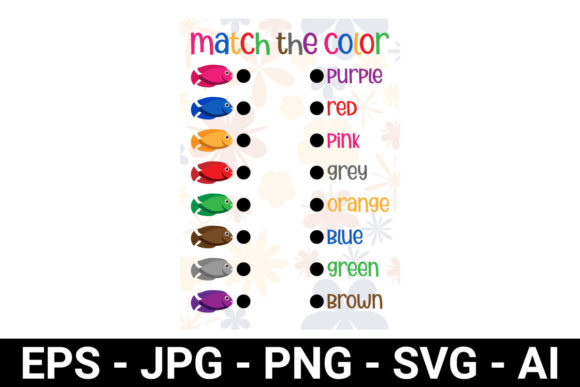
When I first opened the Match the Color Activity Sheet in my digitizing software, the mood was immediately clear: playful, structured, and inviting. The layout relies on bold shapes and distinct color blocks, which is excellent news for embroidery. Unlike intricate floral designs that require hundreds of tiny stitches to define petals, this activity sheet uses large, defined areas. This suggests it will perform exceptionally well with fill stitch techniques, creating a smooth, satin-like finish on the finished product.
The visual personality feels perfectly suited for the nursery decor market or personalized gifts for teachers. It doesn't scream "complex art piece"; instead, it whispers "interactive learning tool." For an Etsy seller looking to expand their catalog into educational baby items, this design offers a unique angle. It bridges the gap between a functional activity sheet and a decorative element, making it a strong contender for a boutique product line.
Real-World Application: From File to Fabric
To truly test the potential of the Match the Color Activity Sheet, I visualized several real-life scenarios where this design would be stitched. Imagine a custom embroidered tote bag designed for a teacher's gift shop. The design, placed centrally on a sturdy canvas tote, would serve as both a conversation starter and a functional reminder of early childhood development. The bold lines of the activity sheet would stand out clearly against the natural texture of the canvas, ensuring the colors pop without needing excessive thread density.
Another compelling use case is a sweatshirt embroidery project for a daycare center. Picture a cozy fleece hoodie featuring the Match the Color Activity Sheet on the back. Because the design is based on simple shapes, it translates beautifully to stretchy fabrics. The stitch density can be kept moderate to prevent the fabric from puckering when the child moves, maintaining comfort while adding a professional touch. This transforms a basic garment into a branded uniform or a cherished keepsake.
For parents seeking a personalized gift, this design works wonders on pillow covers or kitchen towels. A tea towel with this motif hanging in a home school kitchen adds a whimsical, organized feel. The durability of the embroidery ensures that even after frequent washing—a necessity for kitchen textiles—the design remains crisp. The running stitch outlines common in such designs help define the edges of the color blocks, preventing the fill stitches from bleeding into one another over time.
Navigating Technical Challenges and Limitations
While the Match the Color Activity Sheet is robust, it is not without its challenges. As an experienced decorator, I know that context is everything. If you attempt to scale this design down too small for a cap or a tiny baby onesie, the details may get lost. The nature of an activity sheet implies distinct sections; if these sections become smaller than a few millimeters, the thread colors might blur together, losing the "match the color" logic entirely.
Texture also plays a significant role. On highly textured fabrics like heavy denim or thick wool, the fine lines separating the color blocks might struggle to hold their definition. In these cases, I would recommend using a stabilizer specifically designed for heavy materials and potentially simplifying the design by removing the smallest elements. Additionally, dark fabrics require careful consideration. While the design looks great on light backgrounds, stitching bright pastel colors onto black fabric requires precise tension control to ensure the colors remain vibrant and don't look muddy.
Curved surfaces present another hurdle. Attempting to embroider this rectangular-based design onto a curved surface like a baseball cap requires advanced hooping techniques or a specialized cap frame. Without proper support, the straight lines of the activity sheet could warp, ruining the geometric integrity of the design. Always test the design on scrap fabric first, especially when dealing with layered garments or complex curves.
Practical Notes for Designers and Business Owners
If you are planning to integrate the Match the Color Activity Sheet into your craft business, there are several practical steps to take before committing to a full production run. First, review the file formats included in the ZIP folder. The package lists AI, EPS, SVG, JPG, and PNG files. While these are excellent for printing and digital mockups, ensure you have a compatible digital embroidery file format (such as PES, DST, or XXX) for your specific machine. If the embroidery file is not explicitly listed, you may need to digitize the vector versions yourself.
Check the licensing terms carefully. As a small shop product owner, you must confirm whether you are allowed to sell finished items or just personal projects. Many design assets come with restrictions on commercial use. Once cleared, create a printable mockup to visualize how the design looks on different products. Test it in black and white to assess contrast, then compare it against light and dark fabric backgrounds to see how the thread colors interact.
Finally, consider the long-term value. Does this design enhance your brand consistency? Does it appeal to your target audience of parents, teachers, and educators? The Match the Color Activity Sheet offers a fresh perspective on educational embroidery, moving away from generic animals and letters toward interactive concepts. By paying attention to hoop size, stabilizer choice, and fabric compatibility, you can turn this graphic into a standout finished product that builds customer trust and engagement.
Final Verdict on Project Viability
In conclusion, the Match the Color Activity Sheet is a versatile asset that shines when used correctly. It is not a one-size-fits-all solution, but for those targeting the early education market, it provides a unique opportunity to create meaningful, durable, and visually appealing products. Whether you are making a holiday embroidery gift, a classroom decoration, or a custom apparel line, this design has the potential to elevate your work. Just remember to respect the technical limits of your machine and fabric, and always prioritize quality over speed. With the right execution, this design can become a signature piece in your portfolio.